Dry is a reading,
not an appearance.
Measured, controlled water drying for walls, floors, cavities, and structural materials across the South Puget Sound.
What structural drying means
Structural drying removes moisture from building materials and concealed spaces after water damage. Expert Restoration combines extraction, moisture mapping, dehumidification, directed airflow, specialty drying equipment, and documented monitoring to dry what can be saved and identify what cannot.
Key takeaway: A surface can feel dry while moisture remains inside a wall, beneath wood flooring, or in a confined space. We use readings—not guesswork—to guide the drying plan and determine when equipment can be removed.
Call 360-480-7540 — 24/7, answered by a trained specialist. IICRC Certified Firm #70139887 · WA License # EXPERRL784QQ.
What We Do
Water does not stop where the stain ends. It travels through seams, under flooring, into wall cavities, and along framing. Restorative drying starts by finding that moisture, understanding the affected materials and contamination conditions, and building a drying plan around the structure in front of us. The goal is not to run equipment for a preset number of days. The goal is to create controlled conditions, track how the materials respond, and make decisions from documented measurements.
Our work covers mitigation, cleaning, decontamination, and drying. When a material cannot be safely restored in place, we perform controlled removal to reach and treat the affected assembly. If reconstruction is needed after mitigation, we coordinate a handoff to a licensed Washington general contractor partner.
Extract & Map
We remove recoverable water first, then map the affected area with moisture readings. The map establishes where water traveled, which materials are involved, and where concealed moisture may require closer investigation.
Control the Environment
Dehumidifiers remove water vapor while commercial air movers direct airflow across wet materials. When conditions call for it, a negative-air scrubber helps manage airborne particles and maintain controlled work areas.
Dry Cavities & Confined Spaces
Moisture behind walls, beneath cabinets, and inside confined spaces needs targeted access and airflow. Cavity drying methods concentrate the drying effort where ordinary room air cannot reach.
Use Specialty Drying
An infrared drying panel can deliver focused energy to selected materials, while wood-floor drying mats can draw moisture from beneath flooring. We select specialty equipment only when the material and conditions support that method.
Clean & Decontaminate
Drying is only one part of the work. When the loss involves contaminated water or affected surfaces, the plan also addresses cleaning, decontamination, containment, and worker and occupant safety.
Monitor & Document
We return to take readings, evaluate progress, and adjust equipment as the structure responds. Equipment stays or moves based on conditions and drying goals—not a fixed calendar promise.
Controlled Removal
Materials that cannot be cleaned, decontaminated, or dried safely are removed in a controlled way. That creates access to the wet assembly and prevents unsalvageable material from hiding an ongoing moisture problem.
Common Questions
What is structural drying?
Structural drying is the controlled removal of moisture from building materials and concealed assemblies after water damage. It combines extraction, moisture mapping, dehumidification, directed airflow, specialty drying methods, and documented monitoring until the materials reach an appropriate drying goal.
How long does structural drying take?
There is no reliable one-size-fits-all timeline. The water source, contamination level, materials affected, depth of moisture, weather, and access to wet cavities all affect drying. We monitor conditions and moisture readings and remove equipment based on documented progress, not a promised number of days.
Can fans dry water damage inside walls or under floors?
Household fans may dry a visible surface while moisture remains in insulation, wall cavities, subfloors, or wood flooring. Professional drying uses measurement and targeted equipment to reach concealed moisture without spreading contamination into clean areas.
Does every wet material need to be removed?
No. Some materials can be restored in place when the water category, material condition, and access allow it. Materials that cannot be cleaned, decontaminated, or dried safely are removed in a controlled manner so the remaining assembly can be treated and dried.
What happens after the structure is dry?
We complete the mitigation scope and provide documentation of the drying process. If reconstruction is needed, we can hand the project off to a licensed Washington general contractor partner. We do not promise rebuild work as part of our mitigation service.
From a real job
Burst supply line — one bathroom, nine rooms affected.
A single braided supply line behind a toilet let go. Water traveled from the bathroom into the hallway, laundry room, kitchen, dining room, living room, front room, an under-stairs closet, and the crawlspace before anyone saw it. These photos show how we traced the moisture, confirmed it with readings, and set up drying — the same process this page describes.
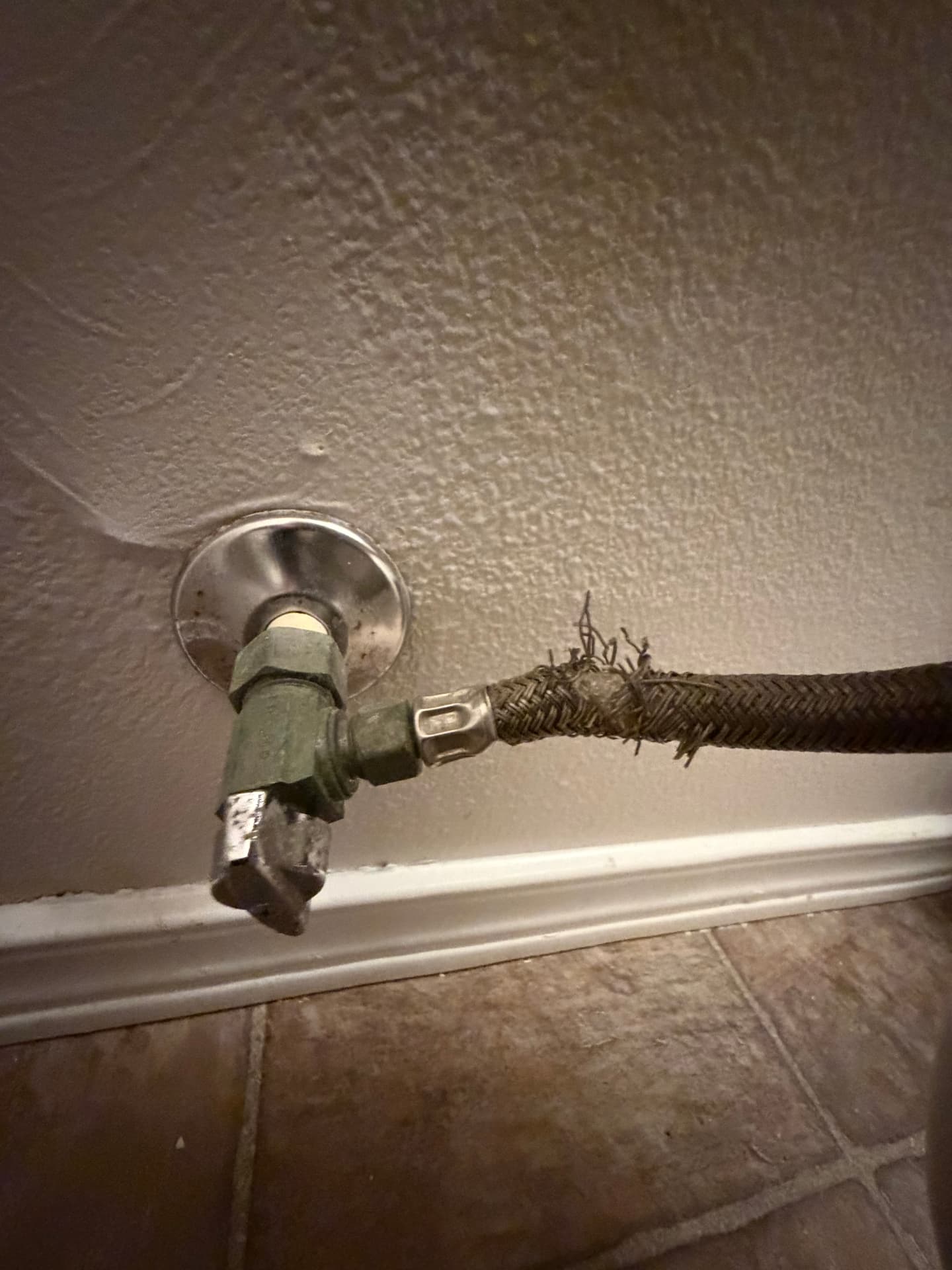
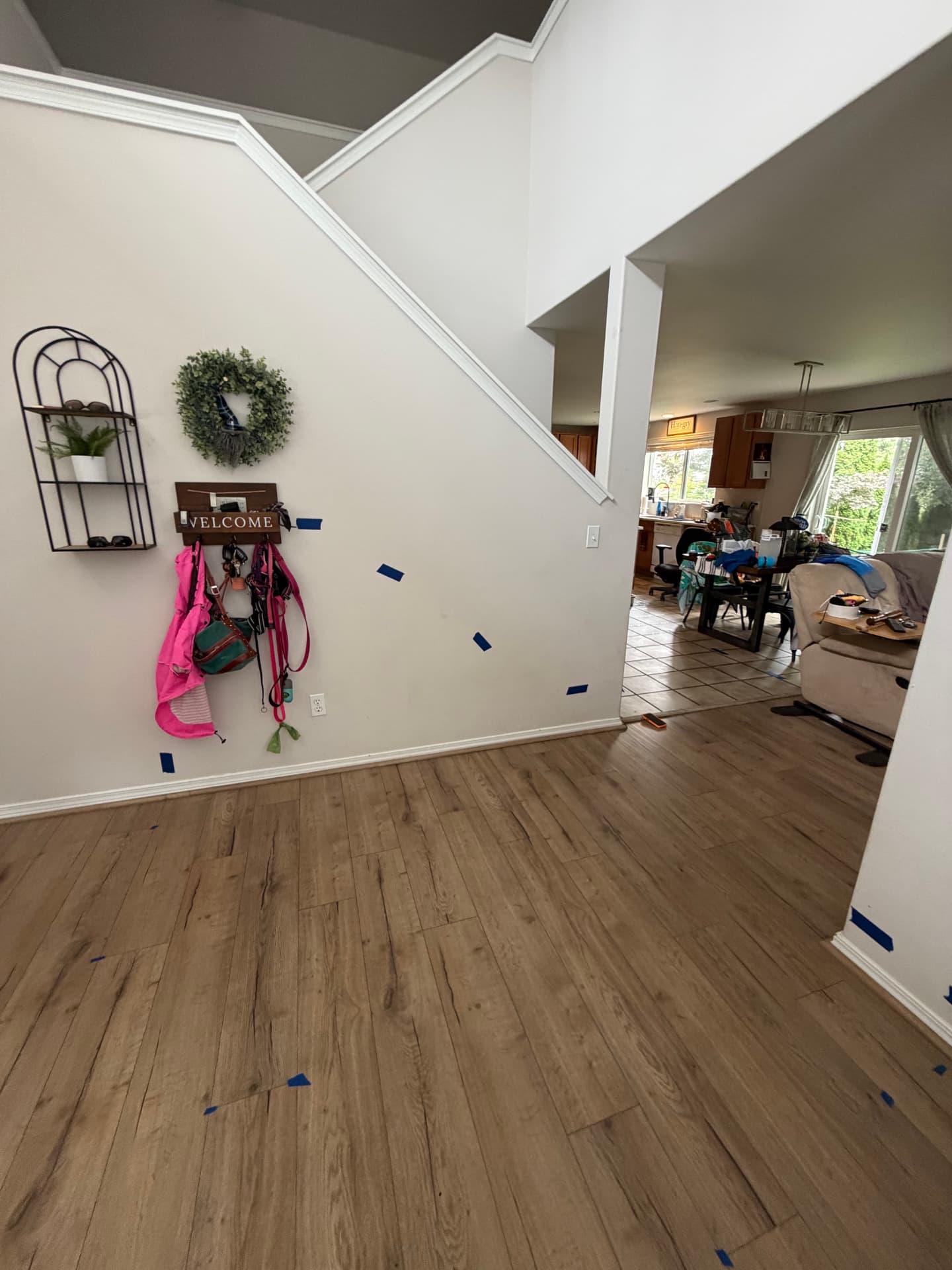
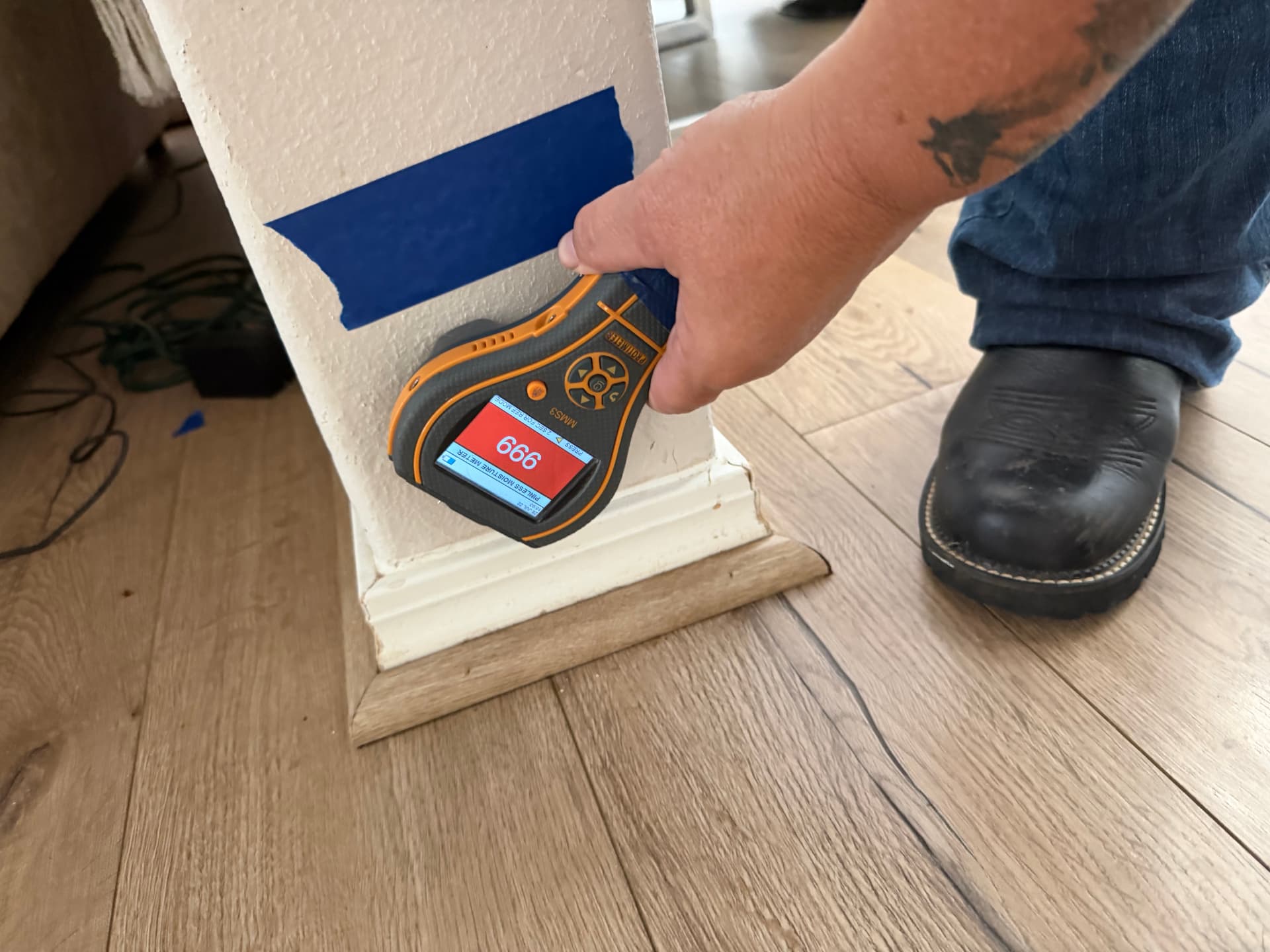
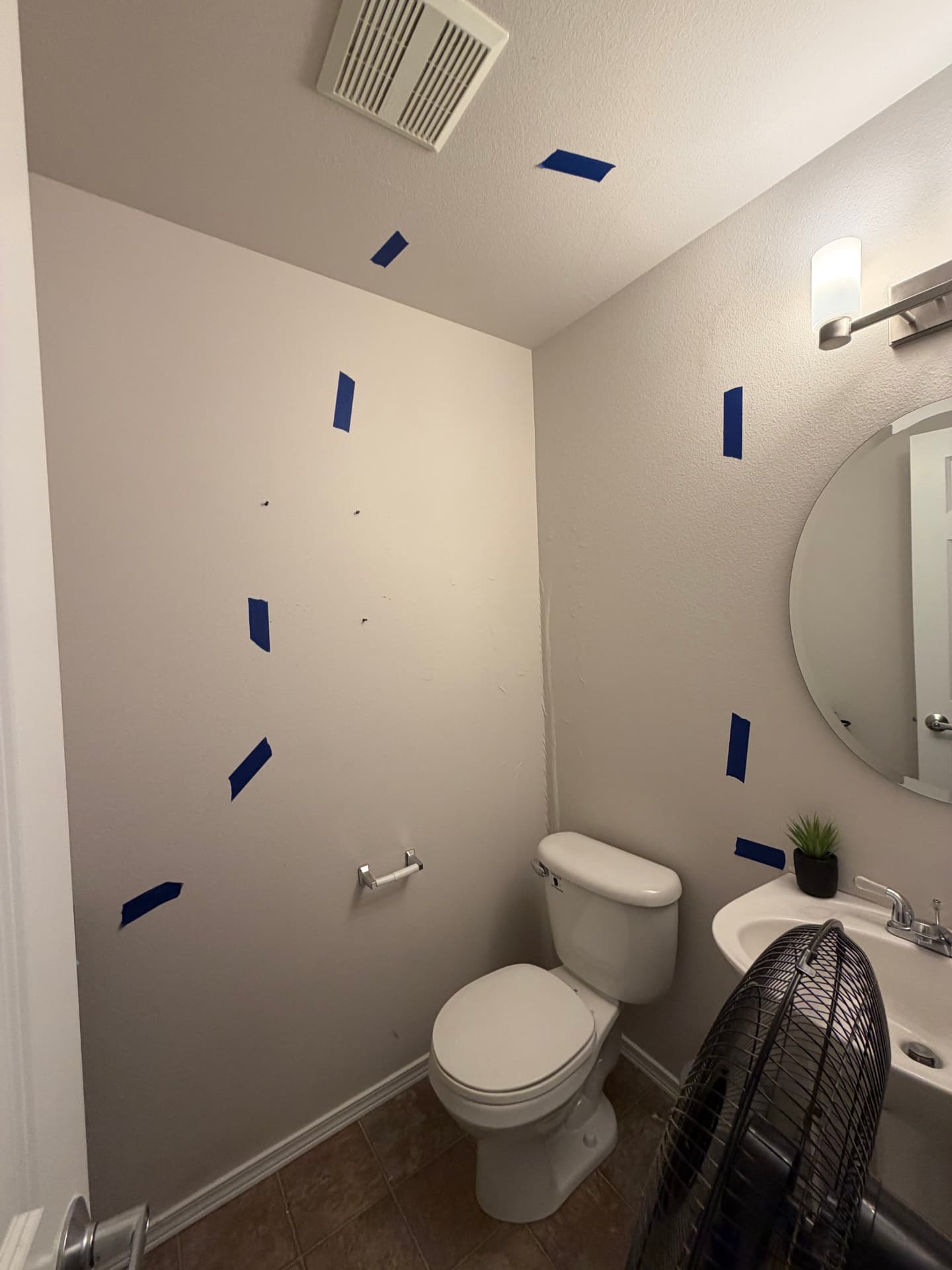
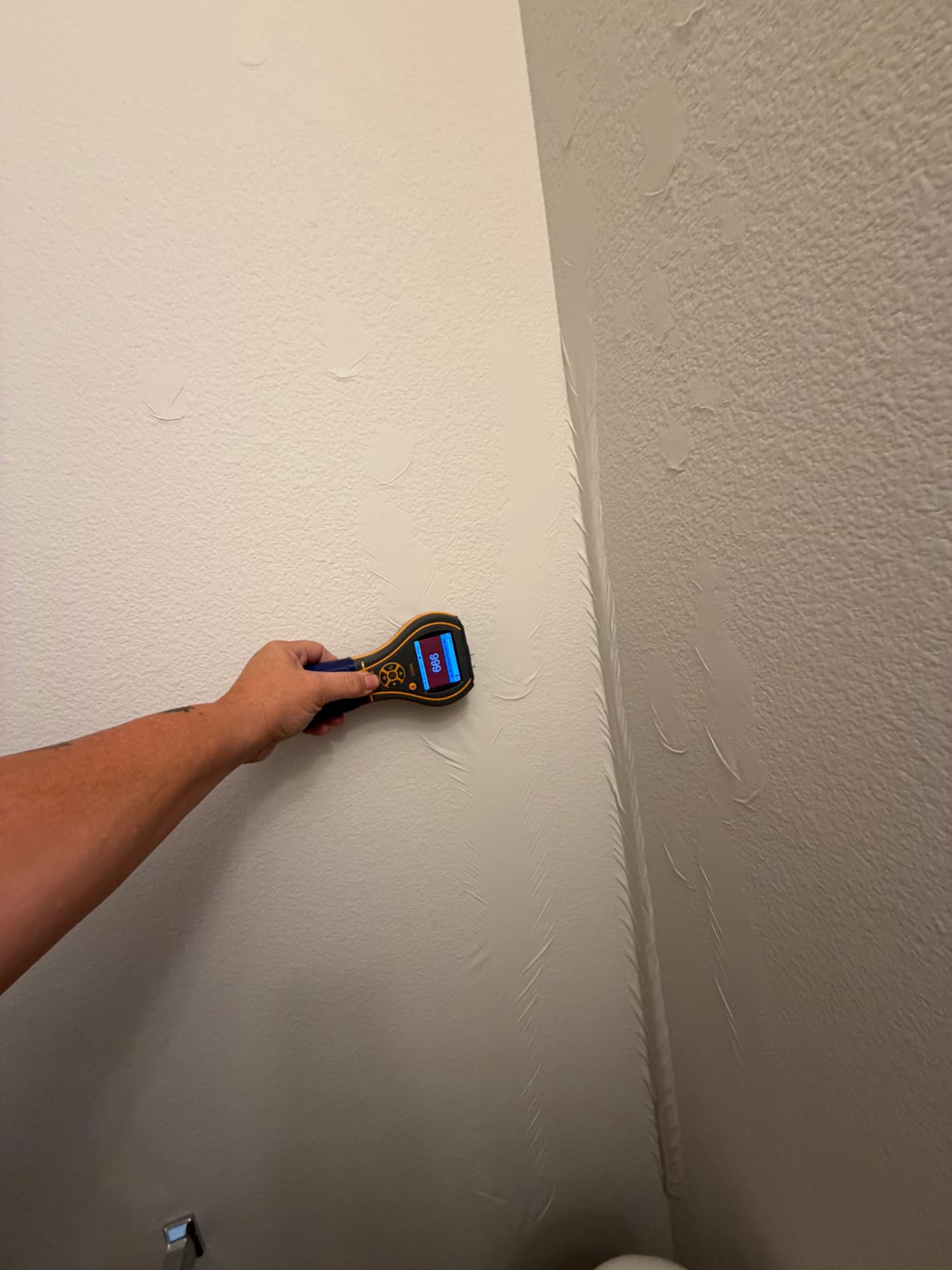
Photos from an actual Expert Restoration mitigation job. Shown with permission; customer details removed.
From the same job
Equipment on site — drying, monitoring, and the work in between.
Once the moisture map was set and unsalvageable materials were removed, the drying equipment went in across every affected room — the kitchen, hallway, living room, under-stairs closet, and laundry room. Dehumidifiers pulled water vapor from the air, air movers directed airflow across wet surfaces and into opened cavities, and tape marks held each monitoring point in place. The work is not finished when the equipment arrives. It is finished when the structure is clean, dry, and documented.
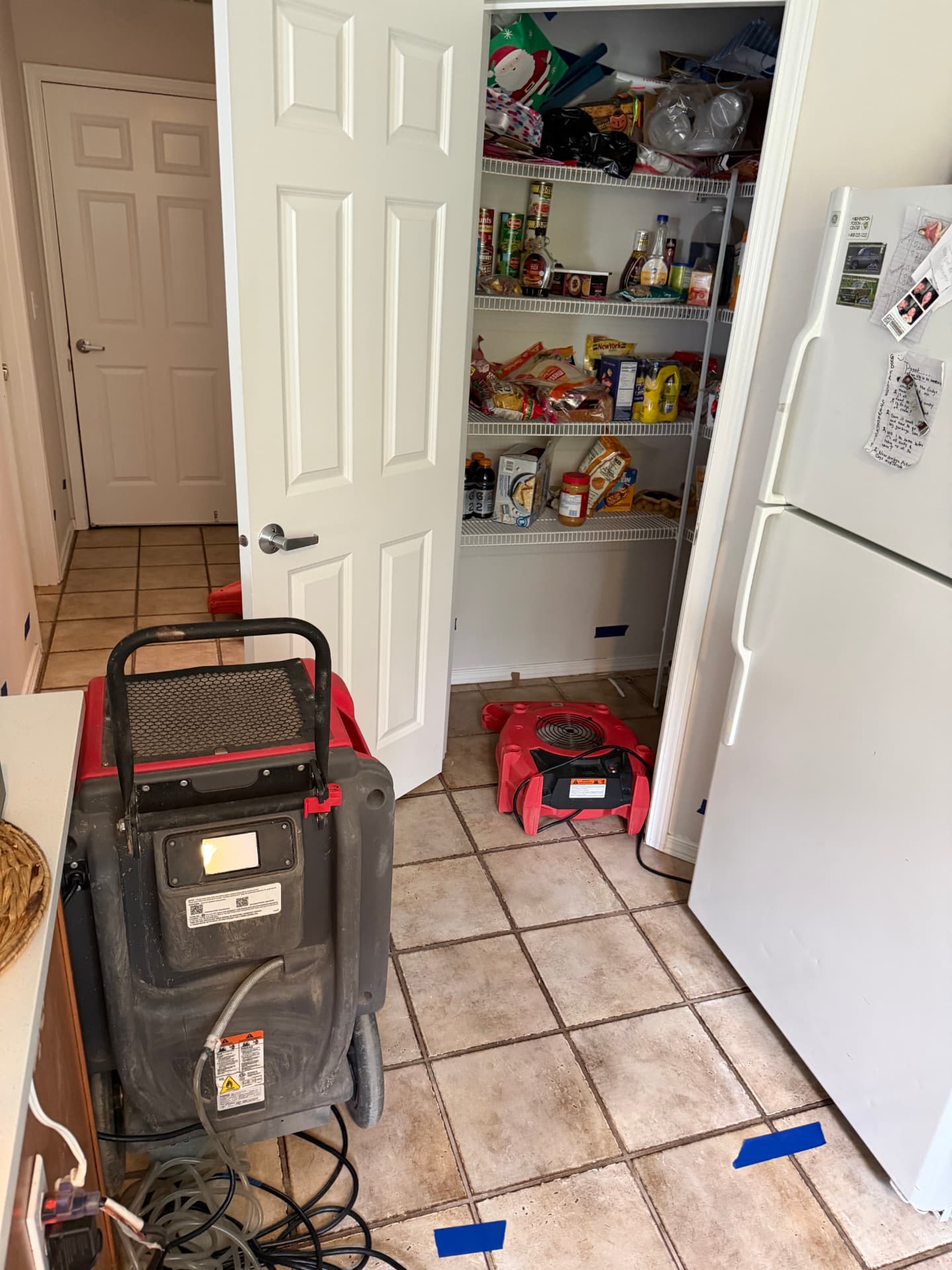
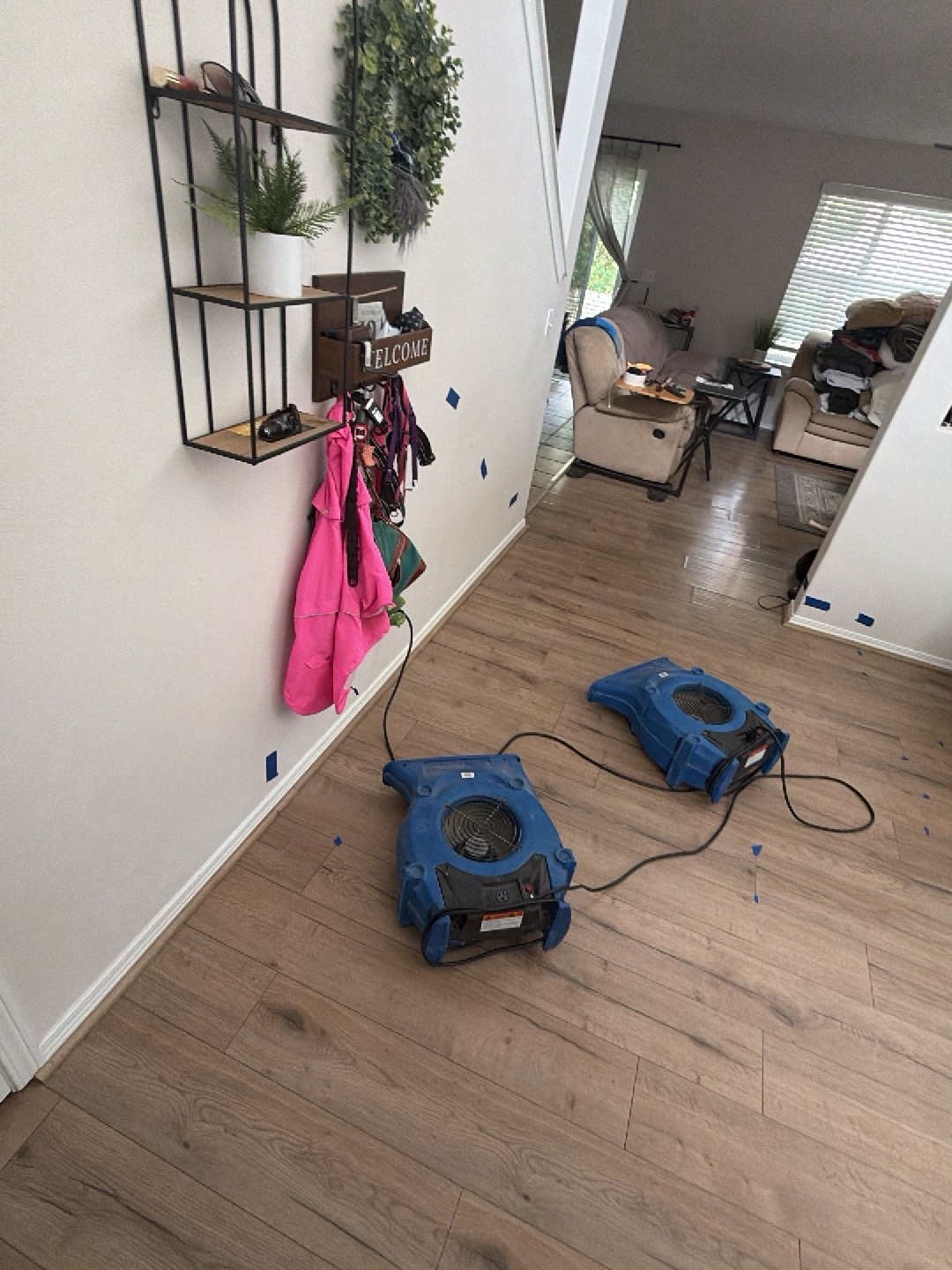
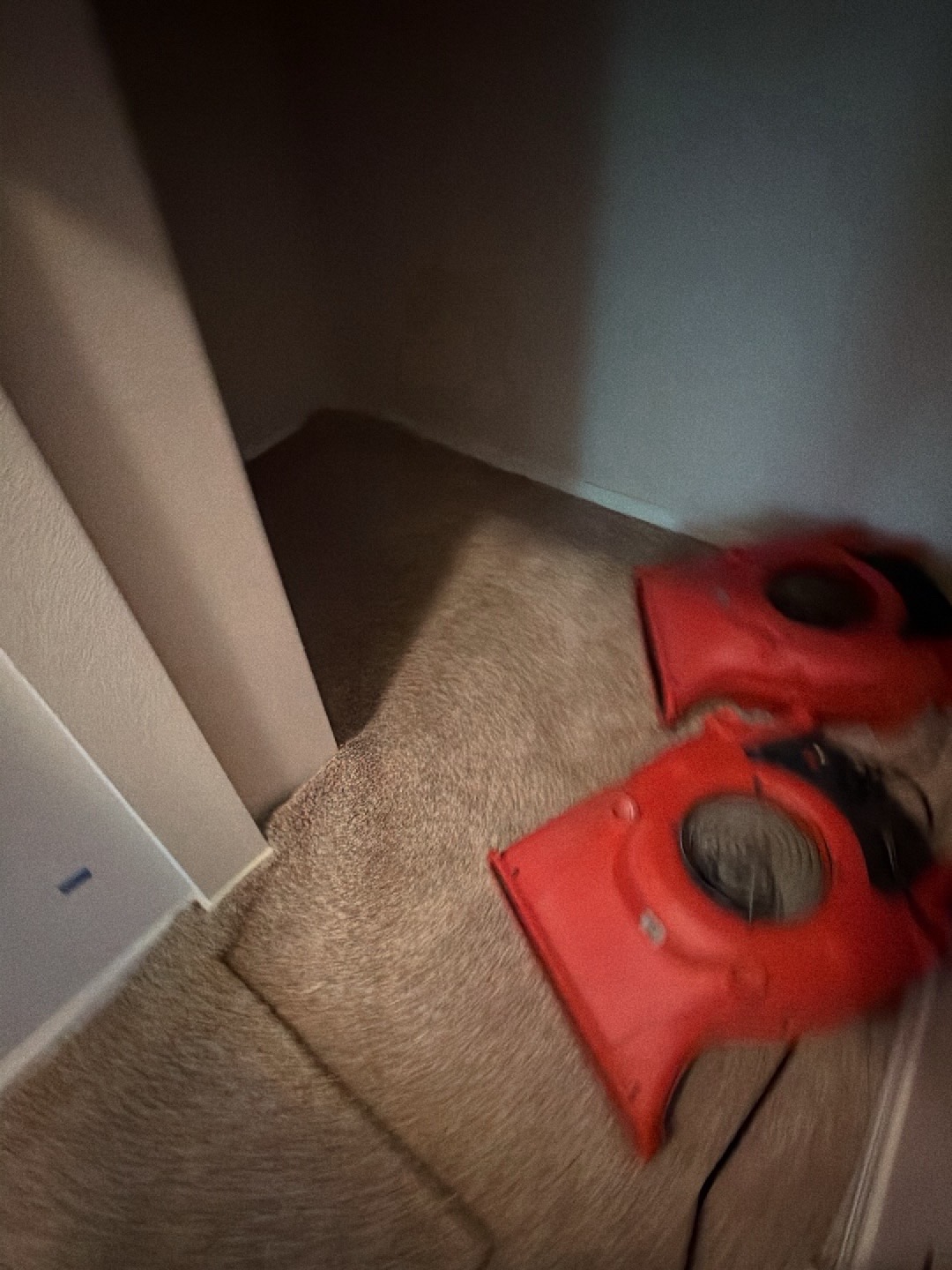
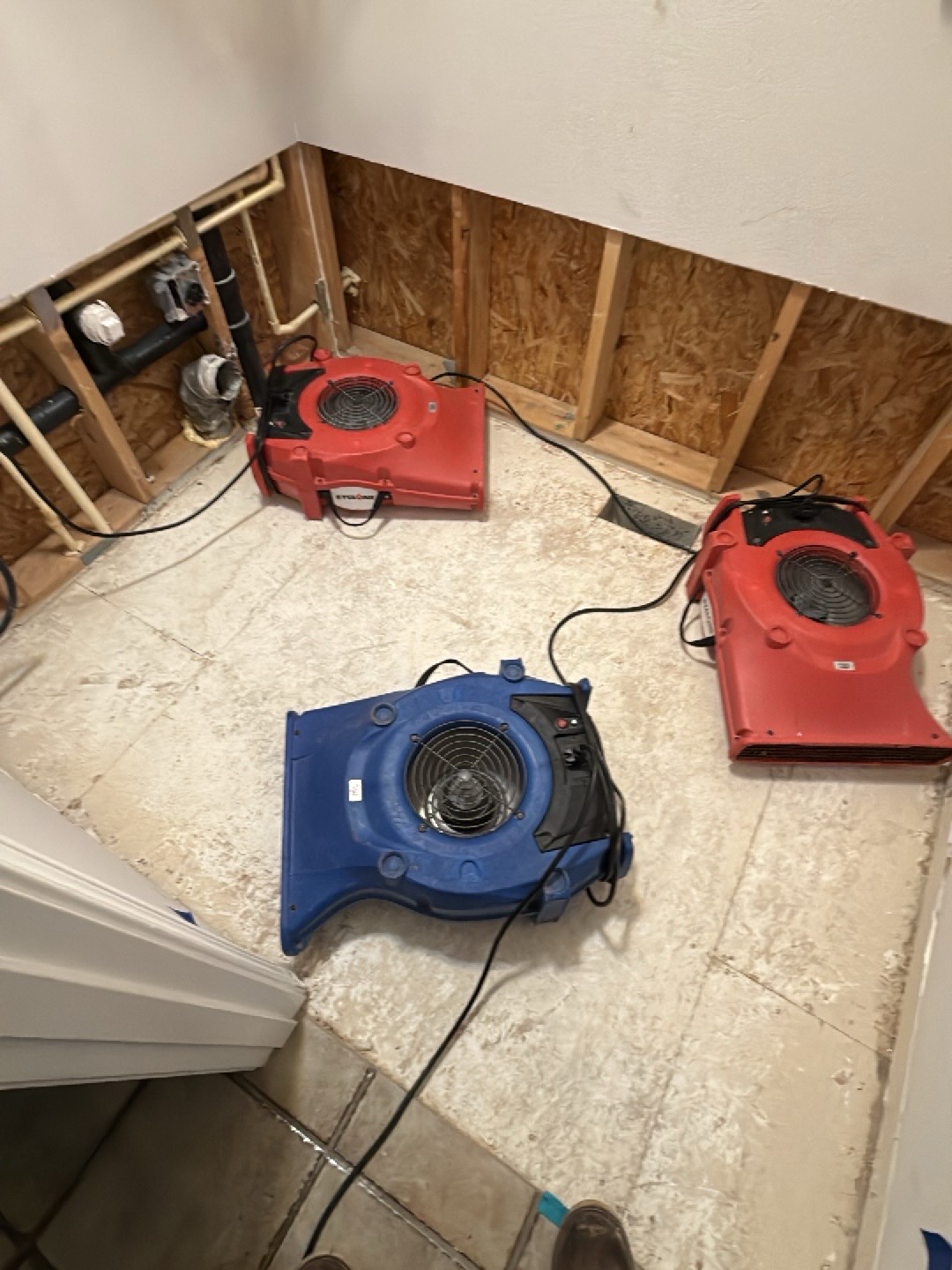
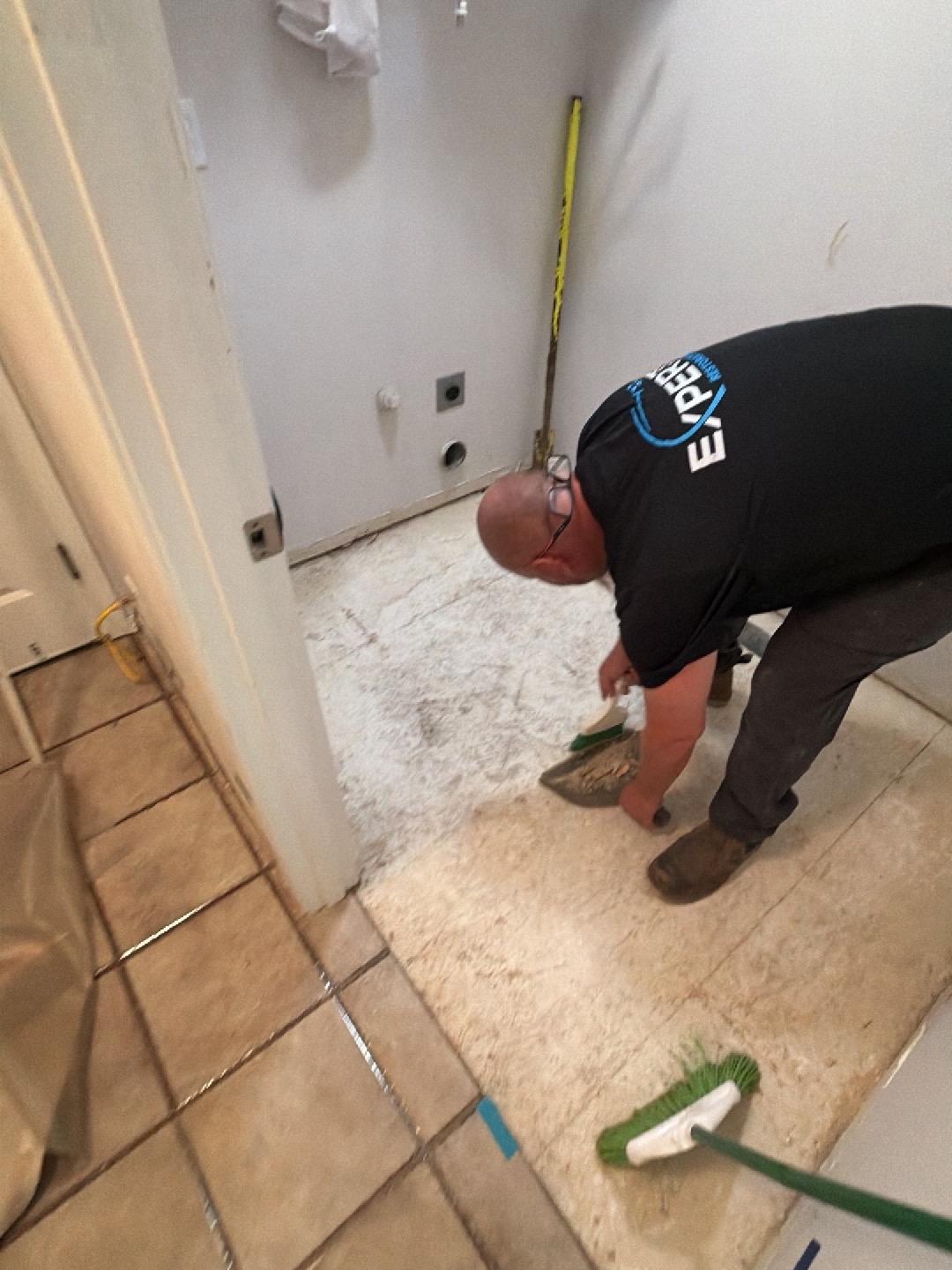
Photos from the same Expert Restoration mitigation job. Shown with permission; customer details removed.
From the same job
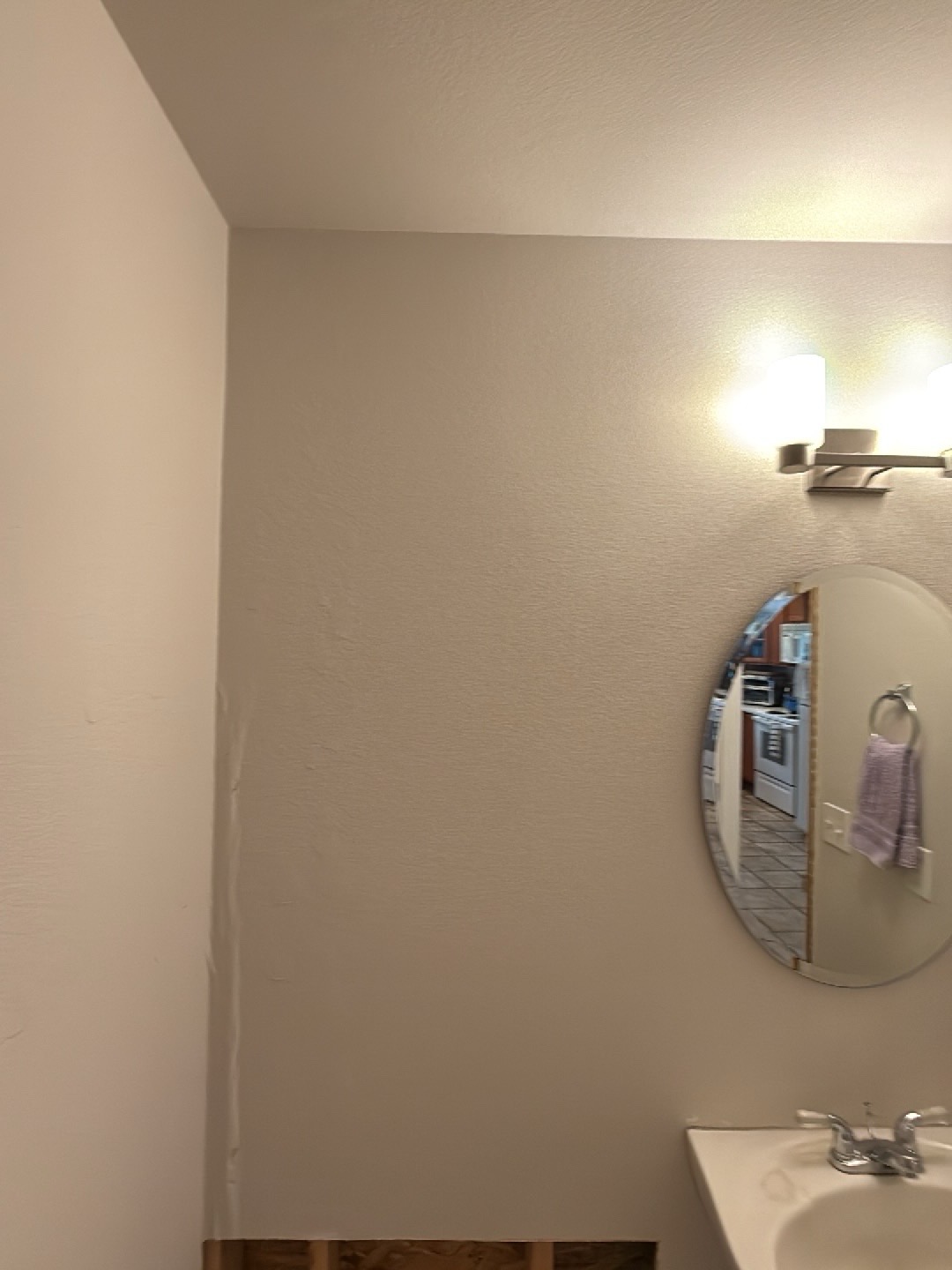
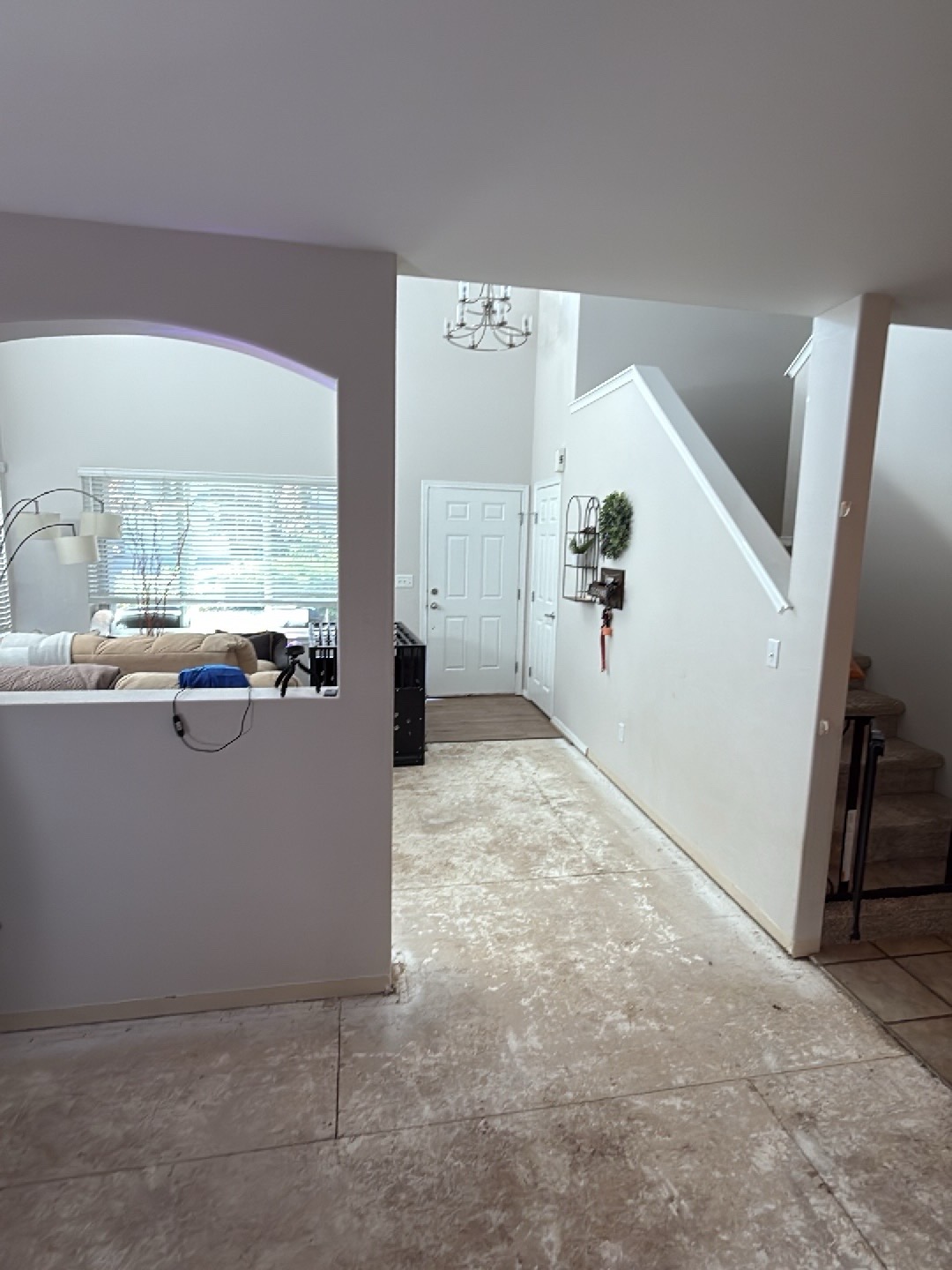
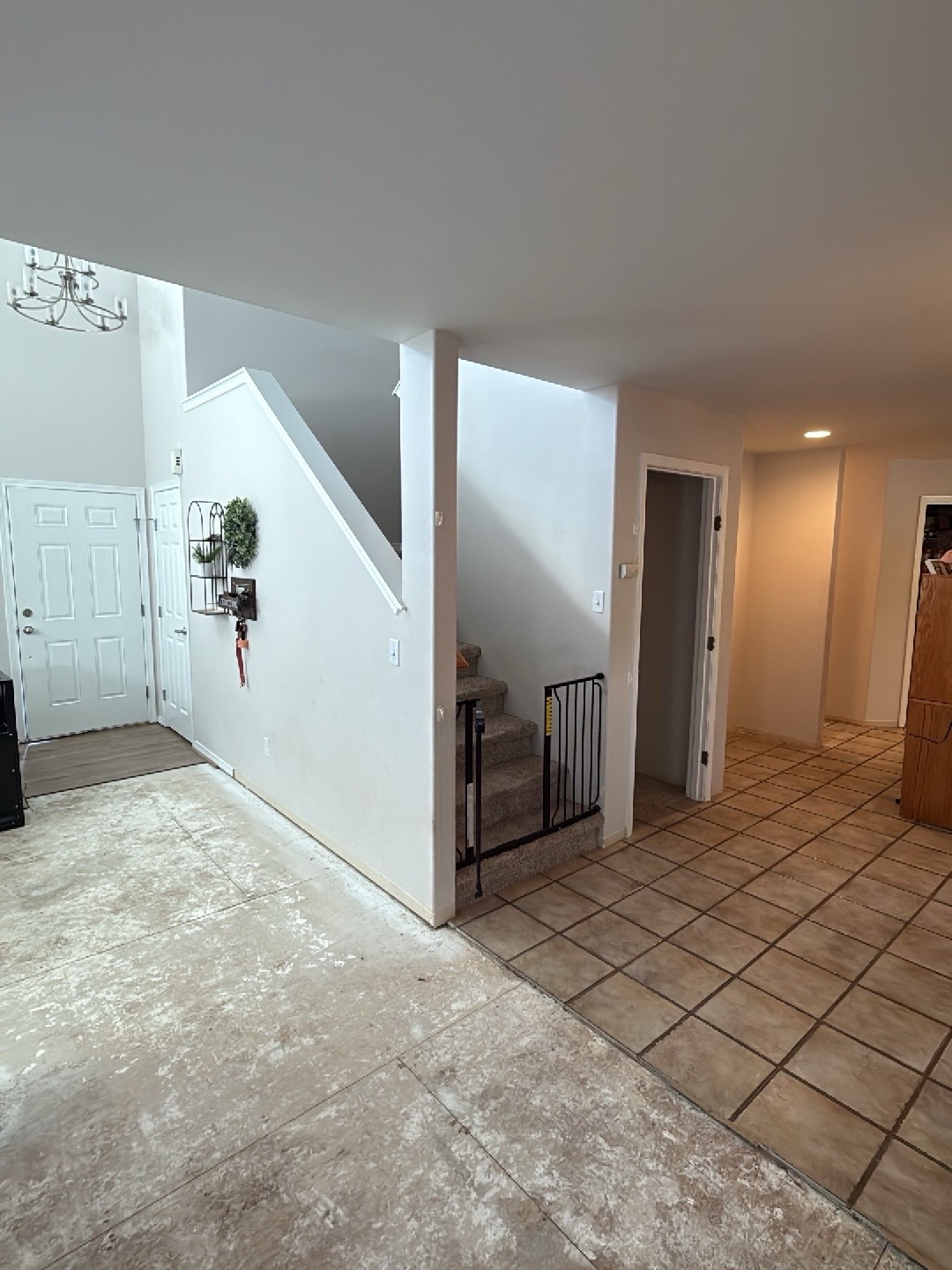
After mitigation — dry, mapped, and documented.
The same burst supply line, after the drying scope was complete. Wet materials that could not be safely restored were removed in a controlled manner, the wall cavities were treated and dried, and final moisture readings confirmed the structure was at an appropriate drying goal. The meter that read 999 behind the toilet now reads 11.8 — green, dry. This is what “dry is a reading, not an appearance” looks like when the work is done.
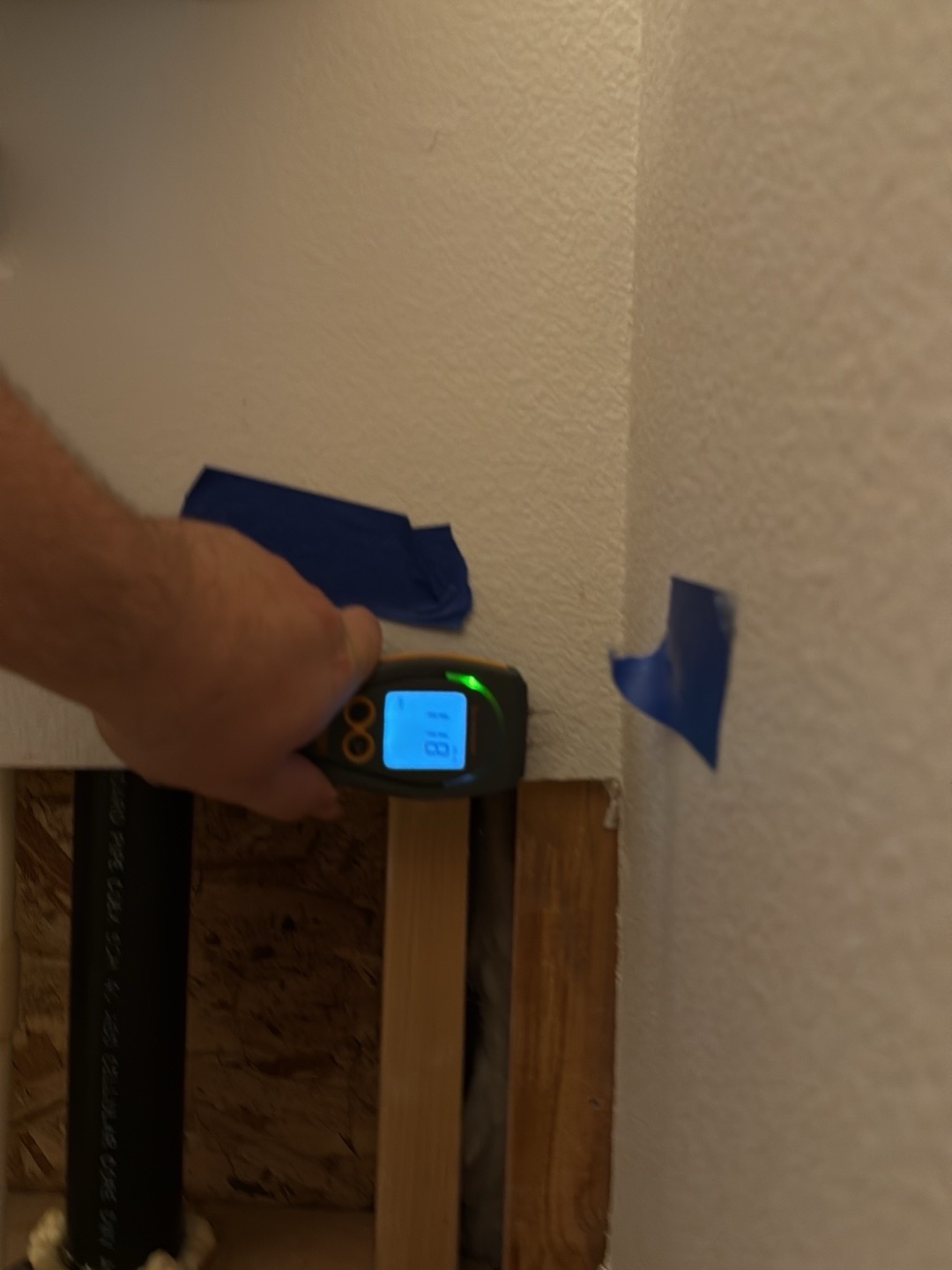
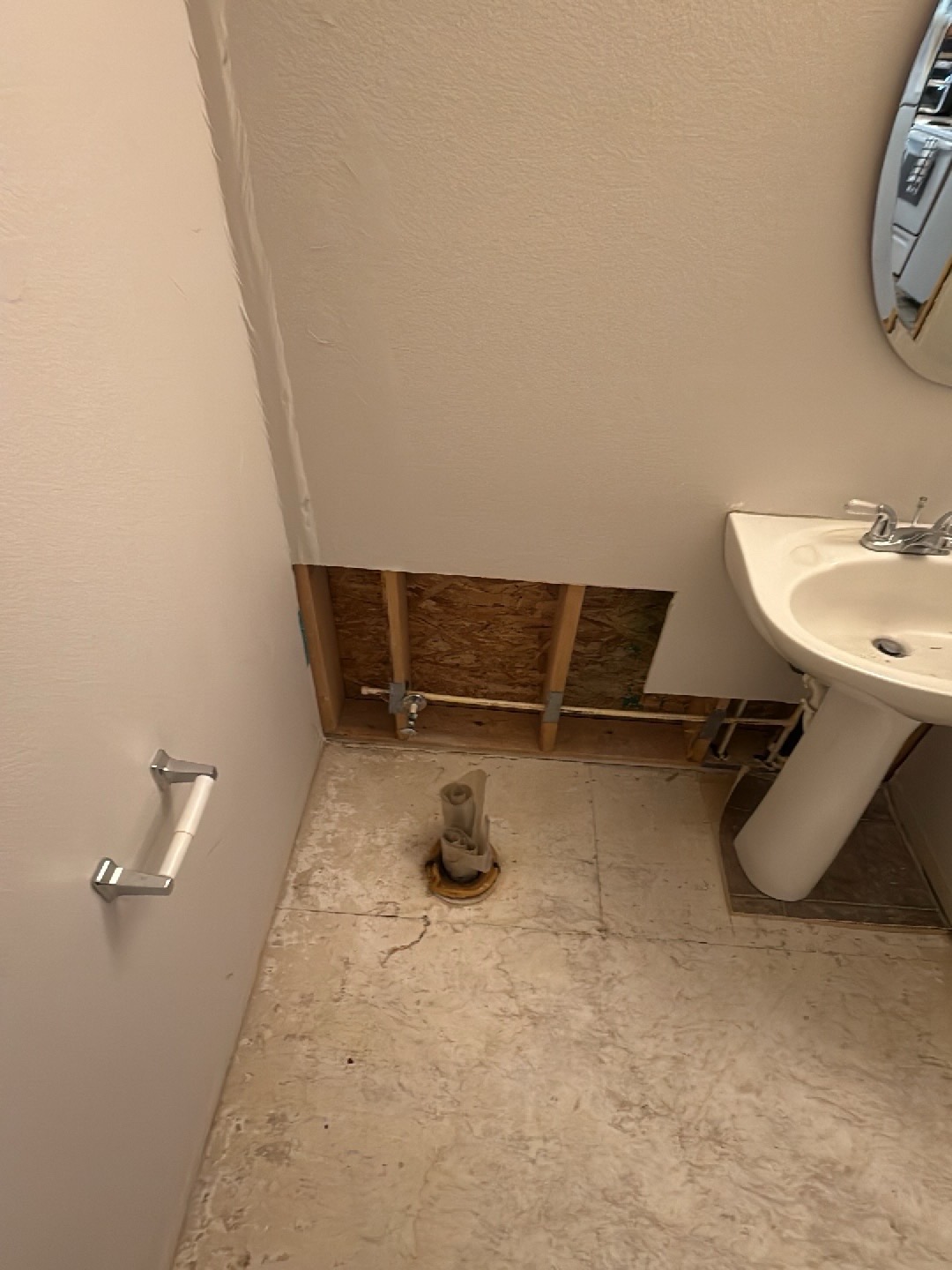
Photos from the same Expert Restoration mitigation job. Shown with permission; customer details removed.
Related services
From active water to documented dry.
If water is still moving, start with our 24/7 emergency water damage response.
For the complete mitigation scope, see our water damage restoration services.
One call, and the chaos starts to settle.
A trained restoration specialist answers — not a call center. We show up. Every time, across the South Puget Sound.
24/7 Emergency Dispatch · Thurston · Mason · Lewis · Grays Harbor